Blog
How Much Equity Can I Use? The 80% Rule Explained

Usable equity is usually worked out as up to 80% of your home's value, minus what you still owe on the loan. That means it is often well below the simple gap between what your home is worth and what you owe. Take one example: a home worth about $1M with $550K owing gives about $250K of usable equity, not the full difference between the two. The video above walks through that example. The rest of this article explains how the number is calculated, what it depends on and what people tend to use it for.
What is usable equity?
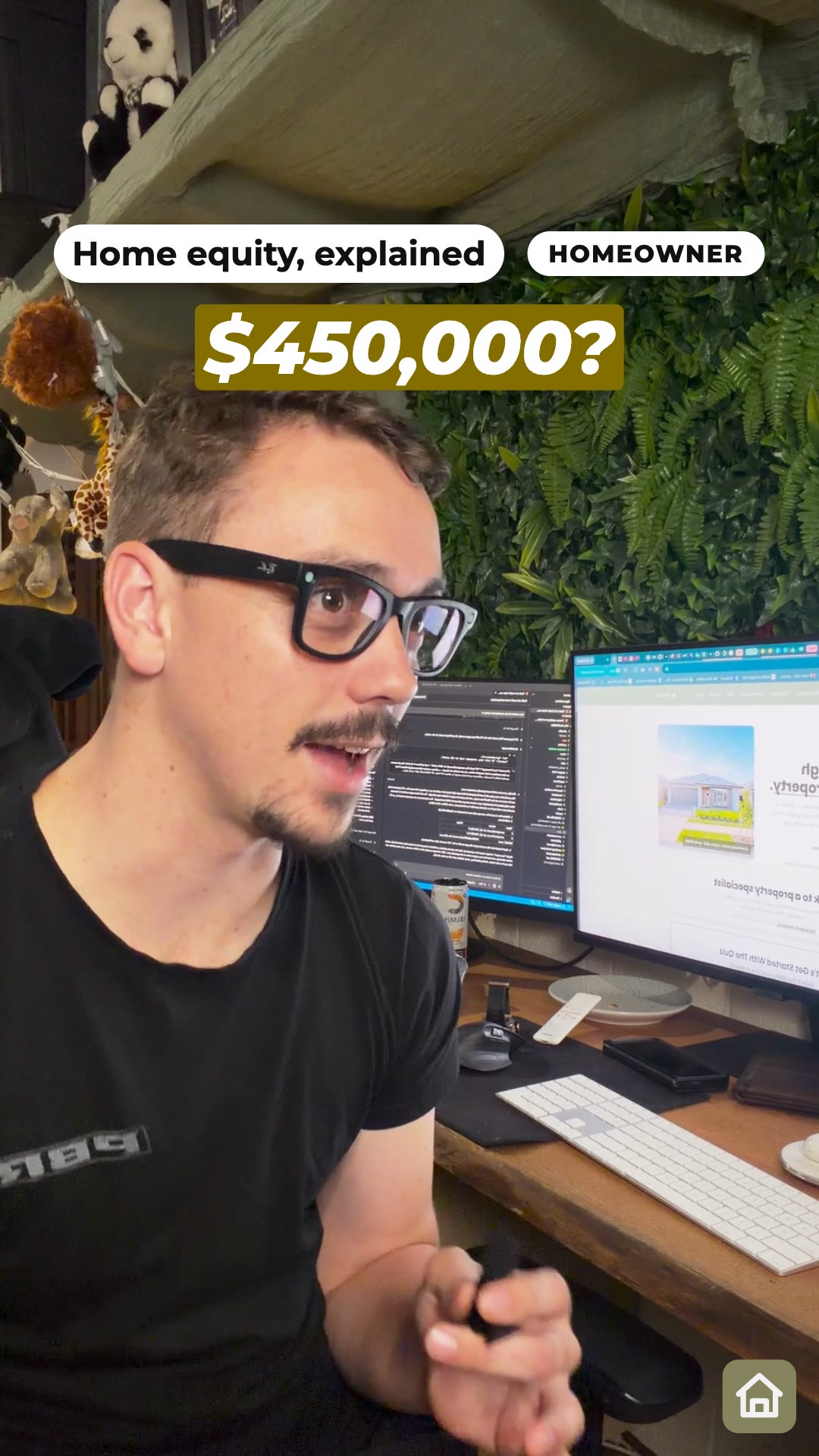
Total equity is your home's value minus your loan. In the example, that looks like four hundred and fifty grand, and it is exactly what the homeowner in the video first assumes.

Usable equity is different. It is the portion a lender may let you borrow against, and it is usually capped at a share of the home's value rather than the whole thing. As the lender in the video puts it: "Not quite, we'll actually lend you about 80% of what the whole home is worth, so you probably get about two-fifty."
That 80% figure is often described as a loan-to-value ratio, or LVR. It is the loan amount as a share of the property's value. Lenders set their own limits and policies, so the ratio that applies to you may be different. Check with a lender or specialist before you count on a number.
How to calculate usable equity
You can get a rough estimate in three steps, using the same example:
- Estimate your home's current value. In the example, the home is worth about $1M. Keep in mind a lender will usually order its own valuation, and it may come in higher or lower than your estimate.
- Multiply the value by 80%. $1M becomes $800K. This is the most a lender may be willing to lend against the home in total.
- Subtract your current loan balance. $800K minus $550K leaves about $250K of usable equity.
To do this for your own home, you will need three things:
- A realistic idea of your home's value (and an understanding that the lender's valuation is the one that counts)
- Your exact current loan balance, which you can find on your statement or banking app
- The maximum lending ratio your lender applies, which can vary between lenders and situations
How does using equity work for an investment property?
Usable equity is not cash sitting in an account. You usually access it by borrowing against your home, for example through a loan increase, a top-up, a loan split or a separate facility. Interest is charged on the money you borrow, just like any other loan.
When buying an investment property, people often use that equity as the deposit, and possibly to cover some purchase costs, with a separate loan for the rest of the price. Our guide to using equity to invest goes through this in more detail.
It is worth remembering that stamp duty, legal fees, lender fees and inspections can take a sizeable bite out of your equity before it ever reaches the deposit. Have a look at the real costs of buying so your budget reflects what you will actually need.
How the loans are structured also matters, both for tax and for risk. A broker, accountant or property investment specialist can explain the options depending on your circumstances.
How much equity can I use? It depends on your borrowing power
Having usable equity on paper does not mean a lender will approve a loan. Lenders also look at serviceability, which is whether your income can support the repayments once your living expenses and existing debts are taken into account.
APRA, the banking regulator, sets the serviceability buffer that lenders apply when they test whether you could still afford repayments if interest rates rose. That buffer, along with each lender's own policies, can limit how much you can borrow, even if you have plenty of equity.
So the real answer to "how much equity can I use?" is the smaller of two numbers: your usable equity, and what a lender believes you can afford to repay. Our guide on how much you can borrow explains how lenders look at this. Moneysmart's free calculators are also a useful place to start getting a feel for repayments.
Boat, kitchen or investment property: does it matter what you use equity for?
In the video, the lender lists what people often spend their equity on: boats, cars, kitchens and trips to Europe. Equity can also be used as the deposit on an investment property.

The video's take on the difference is simple: "Well, the boat's worth less every year. The property comes with a tenant paying rent."
And from the lender's side: "Doesn't matter to us. You pay us interest either way."
That second point is the heart of it. Whatever you spend borrowed equity on, you pay interest on it. A boat or a car usually loses value over time. An investment property can bring in rent, which may help cover some of the costs. But rent may not cover all of them, properties can sit vacant between tenants, and an investment property comes with its own expenses and risks, from maintenance to rate changes.
There is no single right answer. The choice depends on your circumstances, your goals and how comfortable you are carrying more debt. If you are leaning towards investing, the type of property matters too, and our guide on whether to buy a new build or established property covers the trade-offs.
Tax rules to know before using equity to invest in 2026
Whether interest on borrowed equity may be tax deductible generally depends on what the borrowed money is used for, not on which property secures the loan. The ATO has guidance on this, and the rules can be complicated when loans are mixed between personal and investment use.
The 2026 Budget also brought changes investors need to know about. According to Treasury and the ATO, negative gearing and the CGT discount change from 1 July 2027 for established homes bought after 12 May 2026. That means the older rules should not be assumed to apply if you buy an established home after that date. Our guide to the 2026 negative gearing changes explains what has changed.
If you were thinking of investing through a self-managed super fund, note the SMSF borrowing ban from 10 August 2026, also announced in the 2026 Budget.
Because tax outcomes depend so heavily on your situation, it is worth speaking to a registered tax agent before you use equity to invest.
What to do next
Start by gathering your rough numbers: your home's estimated value, your current loan balance and your usable equity estimate using the steps above. That gives you a clearer starting point for any conversation with a lender or specialist.
Property Guide is a free service that matches investors with vetted property investment specialists. We are not a lender, broker, agent or adviser, and we only help with investment property, not homes to live in. If you want to keep reading first, browse our property investment guides.
Watch: what the video covers
- A homeowner learns they have equity on a place worth about a million with five-fifty owing.
- They assume that means four hundred and fifty grand, but the lender explains it will lend about 80% of the home's value, leaving about two-fifty.
- People often spend equity on boats, cars, kitchens and Europe, or it could be the deposit on an investment property.
- The boat's worth less every year, while the property comes with a tenant paying rent.
- The lender doesn't mind either way, because interest is charged regardless. "The boat's lovely though."
This article is general information only and is not personal financial, tax or legal advice. It does not take your circumstances into account, so speak to a licensed professional before making any investment decision.
Frequently asked questions
Can I use all the equity in my home?
Usually not. Lenders typically cap lending at a share of your home's value, often around 80%, so usable equity is generally less than the full gap between your home's value and your loan. Your borrowing power also limits what you can access.
Does the bank use my valuation or its own to work out usable equity?
A lender will usually order its own valuation, and that is the figure it uses. It may be higher or lower than your own estimate, so treat your number as a rough guide.
Is usable equity the same as how much I can borrow?
No. Usable equity is what a lender may let you borrow against your home. How much you can actually borrow also depends on serviceability, meaning your income, expenses and existing debts, including the buffer APRA sets for lenders.
Do I pay interest on equity I access but don't spend?
It depends on how the borrowing is set up. Some facilities charge interest on the full amount drawn, while others only charge on what you use. Ask your lender or broker how a particular option works.
Can I use equity to buy an investment property through my SMSF after August 2026?
The 2026 Budget announced an SMSF borrowing ban from 10 August 2026. Check the ATO's guidance and speak to a licensed professional about how this affects your plans.